
When homeowners start researching triple glazed windows, they’re usually chasing one thing: better insulation. Rising energy costs, stricter building regulations, and growing environmental awareness have pushed many people toward thicker, heavier glazing systems in pursuit of warmer homes and lower bills.
But here’s the question few people ask:
Do you really need three panes of glass to achieve outstanding performance?
Or is there a smarter, more advanced solution that delivers equal — or better — results without the bulk, cost, and structural drawbacks?
In this guide, we’ll explore the realities of triple glazing, where it works well, where it falls short in UK homes, and why FINEO vacuum glazing is increasingly considered one of the best insulation windows technologies available today.
What Is Triple Glazing?
Triple glazing is exactly what it sounds like: a sealed unit made of three panes of glass instead of two.
Standard Construction:
- Three glass panes
- Two insulating cavities
- Gas filling (typically argon or krypton)
- Total thickness of 36–44mm
- Heavier, reinforced frames required
The idea is simple: more layers = better insulation.
By adding an extra pane and cavity, triple glazed windows reduce heat transfer more effectively than traditional double glazing. That makes them attractive for:
- New-build properties
- Passivhaus projects
- Extremely cold climates
In theory, triple glazing creates one of the most energy saving windows systems available in mainstream glazing.
But theory and real-world UK housing don’t always align.
The Advantages of Triple Glazing
To be fair, triple glazing does offer genuine benefits.
1. Strong Thermal Insulation
Triple glazing improves U-values compared to standard double glazing. A typical triple glazed window achieves around 0.8–1.0 W/m²K, depending on specification.
For homeowners focused on energy efficiency, this can reduce heat loss significantly.
2. Improved Sound Reduction
The additional pane and cavity help dampen external noise. Homes near roads or airports may benefit from enhanced acoustic performance.
3. Reduced Condensation
Warmer internal glass surfaces can help reduce condensation build-up during winter months.
So far, so good.
But there’s a trade-off — and it’s a big one.
The Hidden Drawbacks of Triple Glazing
While triple glazing performs well on paper, it introduces significant practical challenges — especially in the UK’s existing housing stock.
1. Very Thick Units (36–44mm)
Triple glazed units are bulky. Most are over 40mm thick.
That means:
- Existing frames often can’t accommodate them
- Rebate depth is insufficient
- Full window replacement is frequently required
In period properties, that’s not just inconvenient — it’s often unacceptable.
2. Extremely Heavy
Adding a third pane dramatically increases weight.
A triple glazed sash window can weigh 30–40% more than its double glazed equivalent.
That weight creates:
- Stress on hinges
- Increased wear on mechanisms
- Higher risk of sagging
- Reduced lifespan of hardware
For traditional sliding sash windows, the added mass can disrupt balance systems entirely.
3. Not Ideal for Period or Listed Homes
Much of the UK housing stock consists of:
- Victorian terraces
- Georgian townhouses
- Edwardian properties
- Listed buildings
- Conservation area homes
These properties were never designed to hold thick, heavy glazing units.
Installing triple glazing often means:
- Replacing original timber frames
- Altering sightlines
- Losing historic detailing
- Failing conservation requirements
For homeowners wanting to preserve character, triple glazing can be a non-starter.
4. High Cost
Triple glazing costs significantly more than double glazing.
You’re paying for:
- Extra glass
- Extra gas filling
- Heavier frames
- Structural reinforcement
- Often complete frame replacement
Yet in the UK’s relatively mild climate, the performance improvement over high-performance double glazing can be marginal in real-world conditions.
Which leads to the obvious question:
Is there a better solution?
The Problem with Triple Glazing in UK Homes
Triple glazing makes sense in Scandinavian climates where winter temperatures regularly drop far below freezing.
But the UK presents a different scenario.
Weight Stress on Hinges and Hardware
Because triple glazed windows are so heavy, hardware experiences greater strain.
Over time, this can lead to:
- Dropped sashes
- Misaligned locking systems
- Draught issues
- More frequent maintenance
Ironically, a product installed to improve efficiency can introduce performance issues years down the line.
Not Ideal for Sash Windows
Traditional sash windows rely on balance systems and weights.
Adding triple glazing often means:
- Re-engineering the entire sash box
- Enlarging frames
- Compromising authenticity
In many heritage projects, this simply isn’t acceptable.
Frame Replacement Is Often Required
Most existing double glazed units are 24–28mm thick.
Triple glazing is typically 40mm+.
That difference means:
- Original frames rarely have sufficient depth
- Entire windows must be replaced
- Installation becomes more invasive
- Costs escalate significantly
If your goal was to upgrade glazing without disturbing the property’s character — triple glazing defeats that aim.
Why FINEO Outperforms Triple Glazing in Many Cases

This is where technology moves beyond simply “adding more glass.”
FINEO vacuum glazing works differently.
Instead of adding more panes and gas cavities, FINEO removes the air entirely.
How FINEO Works
FINEO is a vacuum glazing system:
- Two panes of glass
- A microscopic vacuum cavity
- Ultra-thin edge seal
- Total thickness around 6–8mm
No gas. No bulky cavity.
Just advanced physics.
1. Similar or Better U-Values
FINEO can achieve U-values as low as 0.7 W/m²K or better — comparable to, and often superior to, many triple glazed units.
That means:
- Exceptional heat retention
- Lower energy bills
- Greater thermal comfort
Without needing three panes.
This is why many industry professionals now consider vacuum glazing among the best insulation windows solutions available.
2. Dramatically Thinner (6–8mm vs 40mm)
The difference is remarkable:
| Triple Glazing | FINEO |
| 36–44mm thick | ~6–8mm thick |
FINEO is around one-fifth the thickness of triple glazing.
That means it:
- Fits into existing frames
- Requires no major structural changes
- Preserves sightlines
- Maintains original aesthetics
For period properties, this is transformative.
3. Keeps Original Frames
Because FINEO is so thin and lightweight, it can often be retrofitted into existing timber frames.
This allows homeowners to:
- Preserve original sash windows
- Retain character features
- Comply with conservation requirements
- Avoid full window replacement
Triple glazing rarely offers this flexibility.
4. Much Lighter Weight
Without the third pane and gas-filled cavities, FINEO units are significantly lighter.
Benefits include:
- Less stress on hinges
- Reduced hardware wear
- Longer window lifespan
- Ideal for sliding sash windows
You get high-performance insulation without the mechanical penalties.
5. Lower Embodied Carbon
Triple glazing uses more raw materials:
- More glass
- More gas
- Heavier framing
- Greater transport emissions
FINEO uses:
- Less material
- Slimmer construction
- Reduced transport weight
- No gas filling
For homeowners conscious of sustainability, vacuum glazing represents a smarter long-term environmental choice.
6. Easier, Less Disruptive Installation
Triple glazing often means:
- Removing entire window frames
- Replacing joinery
- Internal redecoration
- External disruption
FINEO can frequently be installed within existing frames.
That means:
- Faster installation
- Less mess
- Lower labour costs
- Minimal disruption
For many UK homes, that practical advantage alone is decisive.
Triple Glazing vs FINEO Comparison
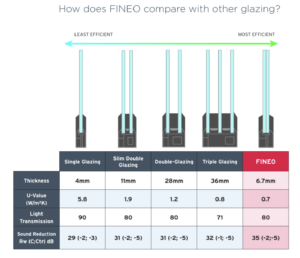
When you compare the two side by side, the technology difference becomes clear.
Triple glazing improves performance by adding more layers.
FINEO improves performance by eliminating heat transfer through vacuum technology.
One adds bulk.
The other removes inefficiency.
Do You Really Need Three Panes?
For some ultra-low-energy new builds, triple glazing may still be appropriate.
But for the vast majority of UK homeowners — particularly those upgrading existing properties — triple glazed windows often introduce:
- Unnecessary weight
- Structural stress
- Frame replacement
- High cost
- Design compromises
When the goal is improved insulation, the smarter question isn’t:
“How many panes do I need?”
It’s:
“What is the most advanced insulation technology available?”
And increasingly, that answer is vacuum glazing.
Final Thoughts
If you’re considering triple glazing because you want better insulation, you’re absolutely right to prioritise performance.
But three panes aren’t automatically better.
They’re simply thicker.
FINEO proves that advanced technology can outperform bulk.
With:
- Comparable or superior U-values
- Minimal thickness
- Lightweight construction
- Frame retention
- Heritage compatibility
- Lower embodied carbon
- Easier installation
FINEO delivers the benefits homeowners want — without the drawbacks triple glazing brings.
If you’re considering triple glazing, you may not need three panes — you need better technology.