
For decades, double glazed windows have been the gold standard in British homes. From 1990s suburban developments to early-2000s renovations, double glazing became synonymous with comfort, warmth, and energy efficiency. In fact, the vast majority of UK homes now feature some form of double glazing.
But in 2026, the conversation is changing.
With energy prices remaining volatile and sustainability higher on the national agenda than ever, homeowners are looking beyond traditional solutions. Building regulations are tightening. Conservation officers are demanding smarter heritage solutions. And property owners are increasingly aware that “standard” no longer means “best.”
Enter FINEO vacuum glazing — a next-generation glazing solution that challenges the long-standing dominance of conventional double glazing.
So, when comparing double glazed windows and FINEO, which truly performs better in 2026?
Let’s break it down.
What Are Double Glazed Windows?

Double glazed windows consist of:
- Two panes of glass
- A spacer bar around the edge
- A sealed cavity between the panes
- Typically filled with argon gas
The cavity is usually between 20–28mm thick, creating a sealed insulated glass unit (IGU). The trapped gas reduces heat transfer compared to single glazing.
How Double Glazing Works
Double glazing reduces heat loss through:
- Reduced conduction – Two panes slow heat transfer.
- Gas insulation – Argon is denser than air, improving thermal resistance.
- Low-E coatings – Reflect heat back into the room.
Most modern double glazing units achieve a U-value between 1.2 and 1.6 W/m²K, depending on specification. (Lower U-values indicate better insulation.)
The Pros of Double Glazing
Double glazing remains popular for good reasons:
✔ Affordable and widely available
✔ Familiar to installers and surveyors
✔ Improves insulation compared to single glazing
✔ Reduces outside noise
✔ Meets standard building regulations
For many properties, especially newer homes, double glazing is a straightforward upgrade option.
The Limitations of Double Glazing
However, double glazing has clear drawbacks in 2026:
- Bulky construction
At 20–28mm thick, double glazing requires thicker frames. In older properties, this often means:
- Replacing original timber frames
- Changing the appearance of sash windows
- Compromising architectural character
- Limited insulation compared to modern technology
While 1.2–1.6 U-values were impressive 15 years ago, newer glazing technologies now significantly outperform this range.
- Not suitable for listed or heritage buildings
Conservation areas and listed properties typically require:
- Retention of original frames
- Slim glazing profiles
- Minimal visual change
Standard double glazing rarely meets these requirements without major compromise.
- Seal failure and lifespan
Most double glazing units last around 15–20 years before seals can degrade, leading to:
- Misty panes
- Condensation between glass
- Reduced insulation performance
This is where the conversation shifts toward innovation.
What Is FINEO Vacuum Glazing?
FINEO is a cutting-edge vacuum glazing system that redefines what energy efficient windows can achieve.
Unlike traditional double glazing, FINEO uses:
- Two panes of glass
- An ultra-thin vacuum gap
- Microscopic support pillars (virtually invisible)
- Advanced edge sealing technology
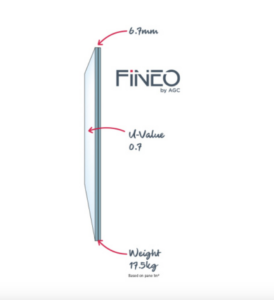
The total thickness? Approximately 6–8mm.
That’s less than half the thickness of standard double glazing.
How Vacuum Technology Works
Instead of filling the gap with gas, FINEO removes almost all air from between the panes.
This creates a vacuum — similar in principle to a thermos flask.
Without air or gas:
- Heat cannot transfer through convection
- Conductive heat loss is dramatically reduced
- Insulation performance increases significantly
Because there is no gas cavity, the unit does not rely on gas retention over time — eliminating one of the main causes of double glazing failure.
Thermal Performance
FINEO can achieve U-values as low as 0.7 W/m²K, nearly doubling the insulation performance of many standard double glazed windows.
This means:
- Lower heating bills
- Warmer internal glass surfaces
- Reduced cold spots
- Improved overall comfort
And crucially, it does this while being slim enough to fit into existing timber frames.
FINEO vs Double Glazing: Side-by-Side Comparison

Here’s a clear breakdown of how the technologies compare in 2026:
The performance gap is no longer marginal — it’s substantial.
Why Homeowners Are Switching from Double Glazing to FINEO
In 2026, we’re seeing a clear shift in homeowner priorities. It’s no longer just about meeting regulations — it’s about long-term value, sustainability, and protecting property character.
Here’s why more people are choosing FINEO over traditional double glazing.
1. It Keeps Original Frames
For period homes, the biggest drawback of double glazing is the need for thicker frames.
With FINEO:
- Original timber sash windows can be retained
- Slim sightlines are preserved
- Architectural integrity remains intact
For heritage properties, this is transformative.
2. Superior Thermal Performance
Heating costs are unlikely to fall significantly in the near future. Investing in higher-performing glazing delivers measurable long-term savings.
Compared to standard double glazing, FINEO:
- Reduces heat loss more effectively
- Maintains warmer internal glass surfaces
- Improves overall EPC ratings
For homeowners looking to future-proof their property, this matters.
3. Reduced Condensation
Because FINEO keeps the internal pane warmer:
- Internal condensation is significantly reduced
- Mould risk decreases
- Window longevity improves
Traditional double glazing can still suffer from condensation — especially in older, poorly ventilated homes.
4. Ideal for Conservation Areas
Many UK towns have strict planning rules. Standard replacement glazing often fails to meet conservation requirements.
FINEO’s thin glazing for heritage homes:
- Mimics original single glazing appearance
- Fits into traditional rebates
- Is frequently accepted by conservation officers
This makes it one of the few viable replacement glazing options for listed buildings.
5. Lower Carbon Footprint
Thicker double glazing requires more materials:
- Larger frames
- More spacer material
- Heavier transportation loads
FINEO’s slim design:
- Uses fewer raw materials
- Reduces embodied carbon
- Improves operational energy efficiency
For environmentally conscious homeowners, this is a decisive advantage.
Cost Considerations: Short-Term vs Long-Term
Double glazing is often cheaper upfront.
However, in 2026, savvy homeowners are looking beyond installation cost alone.
When comparing lifetime value:
- Longer lifespan (25+ years vs 15–20)
- Lower energy bills
- Fewer replacements
- Preservation of original joinery
FINEO often proves to be the smarter long-term investment.
Particularly in high-value or heritage properties, replacing original frames for the sake of standard double glazing can actually reduce property value.
Is Double Glazing Still Relevant?
Yes — but mainly for:
- New-build properties
- Budget-focused projects
- Standard modern frames
For high-performance retrofits, conservation properties, and homeowners prioritising sustainability, FINEO represents a significant technological leap.
Double glazing was revolutionary in the 1980s.
Vacuum glazing is revolutionary now.
The Verdict for 2026
If you’re comparing double glazed windows with FINEO, the decision ultimately comes down to:
- Performance
- Longevity
- Appearance
- Sustainability
- Planning approval
For most modern homeowners seeking maximum efficiency and minimal compromise, FINEO clearly outperforms traditional double glazing.
It delivers:
✔ Better insulation
✔ Slimmer profiles
✔ Heritage compatibility
✔ Longer lifespan
✔ Lower carbon impact
In a world where energy efficiency standards are rising and property character is increasingly valued, FINEO isn’t just an alternative — it’s an upgrade.
Thinking of Upgrading Your Double Glazing?
If your current double glazing is:
- Over 15 years old
- Showing signs of misting
- Underperforming in winter
- Not suitable for a heritage property
Now is the perfect time to explore smarter solutions.
Discover why FINEO is the superior long-term investment for energy efficient windows in 2026 and beyond.