
In a conservation area, a house can usually have its windows replaced without planning permission if the new windows are of a similar appearance to the existing ones. Flats, homes under an Article 4 direction and listed buildings follow a different route, a planning or consent application, and this page explains each.
Conservation area windows: planning, replacement and glazing

 20 year warranty
The simplest way to upgrade conservation area windows
Replacing only the glass in an existing frame, and keeping the frame itself, is often the simplest way to upgrade windows in a conservation area. Fineo vacuum glazing is 7.7mm thick, so it fits most original timber sashes and casements without changing how they look from the street.
Sound through the glassHeat through the glassOutside left · Inside right
Illustrative. Laboratory sound reduction (Rw); results in a building depend on the frame and fitting. Glass thickness drawn to scale.Illustrative. Watts per m² of glass at 20°C inside and 0°C outside. Glass thickness drawn to scale.
GlazingdB above singleHeat lost per m²
Single glazing · Ug value
5.8 W/m²K
116 W lost through each m² of glass.
The baseline every other option is measured against.
Single glazing · Sound reduction
29 dB Rw
Rw (C;Ctr) 29 (−2;−3) dB.
The baseline for comparison.
Slim double · Ug value
1.9 W/m²K
38 W lost through each m² of glass.
Slim double lets through 3.1 times less heat than single glazing.
Slim double · Sound reduction
31 dB Rw
Rw (C;Ctr) 31 (−2;−5) dB.
2 dB more sound reduction than single glazing.
Double glazing · Ug value
1.2 W/m²K
24 W lost through each m² of glass.
Double glazing lets through 4.8 times less heat than single glazing.
Double glazing · Sound reduction
31 dB Rw
Rw (C;Ctr) 31 (−2;−5) dB.
2 dB more sound reduction than single glazing.
Triple glazing · Ug value
0.8 W/m²K
16 W lost through each m² of glass.
Triple glazing lets through 7.3 times less heat than single glazing.
Triple glazing · Sound reduction
32 dB Rw
Rw (C;Ctr) 32 (−1;−5) dB.
3 dB more sound reduction than single glazing.
Fineo 8 · Ug value
0.7 W/m²K
14 W lost through each m² of glass.
Fineo 8 lets through 8.3 times less heat than single glazing. It does this in a unit 7.7mm thick, against 36mm for triple glazing.
Fineo 8 · Sound reduction
35 dB Rw
Rw (C;Ctr) 35 (−2;−5) dB.
6 dB more sound reduction than single glazing. That is around a third quieter to the ear, from glass 7.7mm thick.
Which route applies?
| Situation | What usually applies |
|---|---|
| House in a conservation area, no Article 4 direction | Permitted development, if the new windows are of a similar appearance |
| House covered by an Article 4 direction | Planning permission for window replacement |
| Flat or building containing flats | Planning permission, as flats have no householder permitted development rights |
| Listed building in a conservation area | Listed building consent for glazing or window changes |
| Commercial building | Your local planning authority can advise |
Permitted development for houses comes from Class A of the General Permitted Development Order 2015. Exterior work must use materials of a similar appearance to the existing house. The Planning Portal notes that conservation areas can have extra local rules, so a quick word with the council before ordering keeps it simple.
Article 4 directions
Many councils use Article 4 directions to protect the windows, doors and roofs that give a conservation area its character. Historic England’s guidance notes that where a direction applies, a planning application is the route, and this is most common for homes in conservation areas. The council’s website will list the areas covered.


Why the frames matter
In a conservation area, the look of the street depends on the joinery: the depth of the sash, the width of the glazing bars and the way the windows open. Keeping those details is what conservation officers most like to see.
Keeping the original frames and upgrading the glass keeps it simple. A thin unit leaves the joinery as it is, so the window keeps its proportions and sightlines.
Your glazing options
| Option | Thickness | Ug (W/m²K) | Change to the window |
|---|---|---|---|
| Single glazing | 4mm | 5.8 | None |
| Secondary glazing | Separate inner unit | Varies | An inner frame in the reveal |
| Slim double glazing | 11 to 16mm | 1.9 to 1.3 | Often a deeper rebate or new sash |
| Standard double glazing | 28mm | 1.2 | New window |
| Fineo 8 vacuum glazing | 7.7mm | 0.7 | Glass only, frame kept |
Centre pane U-value, W/m²KOverall thickness, mm, to scale
Single glazing 4mm
5.84mm
Above 1.2
Slim double 11mm, krypton
1.911mm
Above 1.2
Slim double 16mm, krypton
1.316mm
Above 1.2
Double glazing 28mm
1.228mm
Meets, new window
Triple glazing 36mm
0.836mm
Meets, new window
Fineo 8 7.7mm, vacuum
0.77.7mm
Meets, existing sash
Where a historic window's character must be kept, Approved Document L allows a centre pane U-value of no more than 1.2 W/m²K. Slim double glazing at 1.9 to 1.3 sits above that line. Fineo 8 is at 0.7.
Double and triple glazing meet the 1.2 line but are 28mm and 36mm thick, too deep for an original sash. Fineo 8 meets it at 7.7mm, so it goes into the existing frame.
U-value bars are drawn on a scale of 0 to 2.0 W/m²K, with the 1.2 limit dashed; the single glazing bar is cut short at 5.8. Centre pane figures from Fineo's published comparison and AGC's datasheets. Limit from Approved Document L, Volume 1, 2021 edition, paragraph 4.10. Whole window figures depend on the frame.
Fineo is also quieter. Fineo 8 has a sound insulation of Rw 35 dB against 29 dB for single glazing, a reduction of around 6 dB that is useful on busy London streets.
Glazing and the building regulations
Replacing only the glass in an existing frame is not normally controlled under the Building Regulations, while replacing the whole window is. For buildings in conservation areas, Regulation 21 means energy efficiency requirements apply only as far as they would not unacceptably alter the building’s character or appearance. Our Part L guide covers this in more detail.

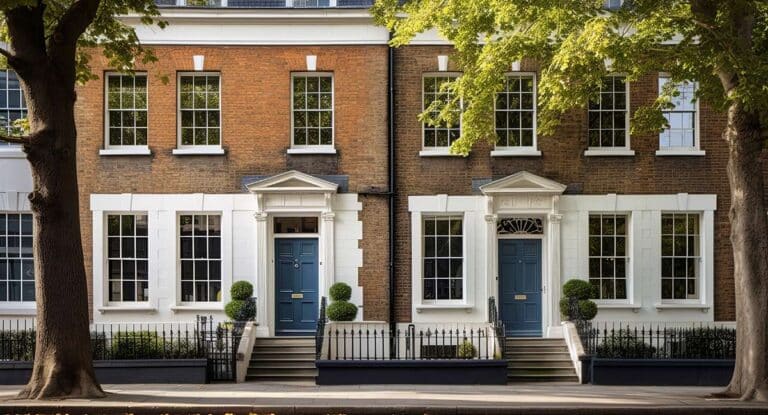
London and other conservation areas
Many of London’s Georgian and Victorian terraces sit in conservation areas, and several boroughs use Article 4 directions on windows. The same applies in Bath, Edinburgh’s New Town and historic town centres across the UK. In each case, a glass only upgrade that keeps the original sashes is the change that best protects the character of the street.
Frequently Asked Questions (FAQs)
Do I need planning permission to replace windows in a conservation area?
For a house, not usually, if the new windows look similar and there is no Article 4 direction. Flats apply for planning permission, and listed buildings for listed building consent.
Is double glazing allowed in a conservation area?
Often, if it keeps the appearance of the existing windows and no Article 4 direction applies. Keeping the frames and fitting thin glass is the approach councils are most likely to welcome.
What is an Article 4 direction?
A direction made by the council that removes some permitted development rights, such as replacing windows or doors, so that planning permission is needed.
Can I keep my sash windows and still make them warmer?
Yes. Repair and draughtproofing first, then secondary glazing or replacing the glass. Fineo vacuum glazing is 7.7mm thick with a Ug of 0.7 W/m²K, so it fits most existing timber sashes.
Do I need building regulations approval to replace the glass?
Not normally. Replacing only the glass in an existing frame is not normally controlled under the Building Regulations. Replacing the whole window is.
Approved by RIBA and IHBC
Fineo is approved by both the Royal Institute of British Architects (RIBA) and the Institute of Historic Building Conservation (IHBC). Our free seminar on vacuum glazing for heritage and conservation projects carries the backing of both bodies, and the time your practice spends with us counts towards CPD.


Keep the frames, lose the draughts
Find an approved Fineo installer near you, or talk to us about windows in a conservation area.