
The main alternatives to secondary glazing in a listed building are slim double glazing and vacuum glazing, both fitted into the existing timber sash in place of the original glass. Fineo vacuum glazing is 7.7mm thick with a centre pane U-value of 0.7 W/m²K, which beats 36mm triple glazing in a pane little thicker than single glass.
Secondary glazing alternatives for listed buildings

 20 year warranty
Fits the sash you already have
Both routes upgrade the glass in a historic window and go through listed building consent. Secondary glazing is often suggested first because it is reversible and leaves the window as it is. This page sets out every option side by side, so you can judge which one suits the building in front of you.
Vertical section, sash bottom railOutside left · Inside right
Not to scale. Timber profile is illustrative.
Frame kept
Fineo goes into the sash that is already there. Before starting, check the sash is sound enough to resist deformation and that its hardware can take the change.
Clean out
Remove the old putty, any tape or glazing material, and the original pane.
Rout if needed
Leave the rebate flat, smooth and even, with nothing hard or sharp left in it. Where the rebate is too small, rout it out to Fineo’s minimum distances. Degrease if needed, and prime porous or treated timber with the putty maker’s primer.
50mm blocks
Apply a foam strip or bedding putty to the inner face of the rebate. Set load bearing blocks of polypropylene or polyamide, 70 to 95 Shore A and at least 50mm long, at least one block length in from the corners. AGC does not recommend EPDM or neoprene blocks, and rules out hardwood blocks with coated glass.
15mm bite
Stand Fineo on the blocks, level it and centre it so the gap is even all round. Keep 2 to 3mm edge clearance so the glass touches nothing hard, and at least 13mm of glass in the rebate, with 15mm the ideal. Fit it so the unit’s marking number reads from inside.
10 × 10mm
Run a triangular putty bead at least 10mm by 10mm, using a putty approved to EN standards, and cure it as the maker directs. Check the putty a year after fitting, then once a year. For anything the guidance does not cover, such as linseed oil putty, ask Fineo technical support first.
Step 1 of 6
The original sash
Frame kept
Fineo goes into the sash that is already there. Before starting, check the sash is sound enough to resist deformation and that its hardware can take the change.

Why look beyond secondary glazing
Secondary glazing adds a second window inside the reveal. Historic England describes it as a low risk intervention that can cut heat loss as effectively as double glazing, and it suits many buildings well.
On a fine Georgian or Victorian interior it can sit awkwardly with working shutters, panelling and window boxes, and some councils ask for consent where the fixings touch historic joinery. The household then lives with two windows to open, clean and maintain. Where the brief is for the sash to look and work as one window, replacing the glass within the existing sash is the other route.
The options side by side
| Option | Overall thickness | Ug (W/m²K) | Gas fill | Fits the existing sash | Typical guarantee |
|---|---|---|---|---|---|
| Single glazing | 4mm | 5.8 | None | Yes, as found | None |
| Secondary glazing | Separate inner unit | Varies by system | Varies | No, fitted inside the reveal | Varies by supplier |
| Slim double glazing | 11 to 16mm | 1.9 to 1.3 | Krypton | Often needs a deeper rebate | 5 years |
| Fineo vacuum glazing | 7.7mm | 0.7 | None | Designed for existing timber frames | 20 years |
Centre pane U-value, W/m²KOverall thickness, mm, to scale
Single glazing 4mm
5.84mm
Above 1.2
Slim double 11mm, krypton
1.911mm
Above 1.2
Slim double 16mm, krypton
1.316mm
Above 1.2
Double glazing 28mm
1.228mm
Meets, new window
Triple glazing 36mm
0.836mm
Meets, new window
Fineo 8 7.7mm, vacuum
0.77.7mm
Meets, existing sash
Where a historic window's character must be kept, Approved Document L allows a centre pane U-value of no more than 1.2 W/m²K. Slim double glazing at 1.9 to 1.3 sits above that line. Fineo 8 is at 0.7.
Double and triple glazing meet the 1.2 line but are 28mm and 36mm thick, too deep for an original sash. Fineo 8 meets it at 7.7mm, so it goes into the existing frame.
U-value bars are drawn on a scale of 0 to 2.0 W/m²K, with the 1.2 limit dashed; the single glazing bar is cut short at 5.8. Centre pane figures from Fineo's published comparison and AGC's datasheets. Limit from Approved Document L, Volume 1, 2021 edition, paragraph 4.10. Whole window figures depend on the frame.
Figures for single, slim double and vacuum glazing are from Fineo’s published comparison and AGC’s datasheets.
Slim double glazing
Slim double glazing uses two panes with a krypton filled cavity of 4 to 8mm, giving units between 11 and 16mm thick. The thinnest units reach a U-value of about 1.9 W/m²K, and the thicker ones about 1.3 W/m²K.
Many councils accept it, especially where sashes are being remade. The trade off is depth. A unit three or four times thicker than the original glass often means cutting back the rebate or making new sashes, and the double reflection can show from the street. Historic England puts the service life of slim profile double glazed units at around 25 years.

Vacuum glazing
Vacuum glazing holds two panes apart with a vacuum gap of about 0.1mm. With no air or gas to carry heat, it insulates far better than its thickness suggests. Historic England’s guidance on modifying historic windows says that where the existing glass is of no historic interest and the frame profiles are thick enough, it may be possible to fit slim profile or vacuum double glazing into existing sashes or casements.
Fineo is made by AGC in Belgium and is CE marked under ETA 20/0048. It has no inert gas and no evacuation port, and it carries a 20 year warranty.
| Fineo unit | Thickness | Ug (W/m²K) | Light transmission | Rw (C; Ctr) |
|---|---|---|---|---|
| Fineo 8 | 7.7mm | 0.7 | 79% | 35 dB (−2; −5) |
| Fineo 10 | 9.7mm | 0.7 | 79% | 36 dB (−2; −3) |
| Fineo 12 | 11.7mm | 0.7 | 78% | 36 dB (−1; −2) |
For the architect, the point is that the sash keeps its profile, glazing bars and way of opening. Shutters still close and there is one window to clean. Fineo Heritage glass, in six finishes matched to glass from the 1880s to the 1960s, keeps the look of the elevation.
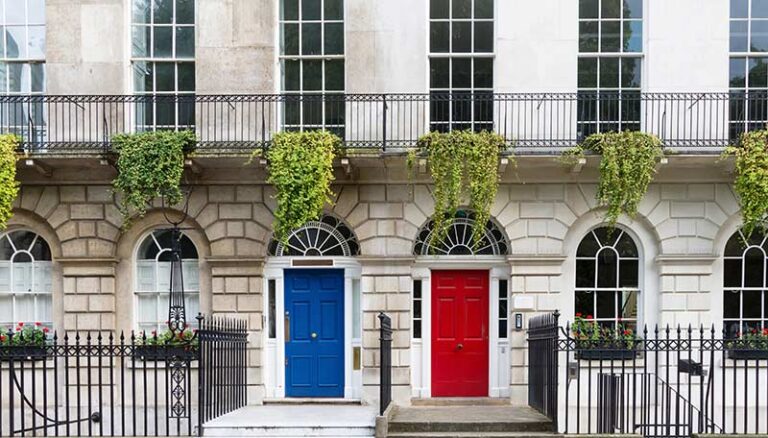
Where the original glass should stay
If the historic glass itself is significant, such as crown or cylinder glass, it should stay in place. Historic England’s advice is that early glass should be retained wherever possible. Secondary glazing or restored shutters protect that glass and the window around it.
Secondary glazing also suits windows where the sash is too decayed or too fine to take new glass. A condition survey will usually settle which category a window falls into.
Making the consent case
Upgrading the glass in a listed window goes through listed building consent, a free application in England. A condition survey, a heritage statement, a section showing the new glass in the existing rebate and the manufacturer’s datasheets give the conservation officer what they need.
Fineo has been installed in listed and historic buildings including 30 Gloucester Place in London, Egyptian and Dudley House on Piccadilly and the Royal Observatory Edinburgh. These projects are useful reference points in a pre application discussion.

Frequently Asked Questions (FAQs)
What is the best alternative to secondary glazing for a listed building?
Vacuum glazing gives the best thermal result for the least change to the window, fitted into the existing sash wherever the glass is not historic. Fineo is 7.7mm thick with a Ug of 0.7 W/m²K, so it fits most original timber frames and outperforms 36mm triple glazing.
Do I need listed building consent to replace the glass in a sash window?
Usually, yes, and it is a free application in England with a decision due in eight weeks. An early chat with the conservation officer helps the application go smoothly.
Is vacuum glazing better than slim double glazing for listed sash windows?
On performance, yes. Fineo reaches 0.7 W/m²K at 7.7mm, while slim double glazing sits between 1.9 and 1.3 W/m²K at 11 to 16mm and relies on a krypton fill.
Can vacuum glazing be fitted into existing timber sash windows?
Yes, provided the frame is in good condition. Fineo was designed to be retrofitted into original timber sash and casement frames, and an approved installer can confirm the rebate on each window.
Does vacuum glazing look different from historic glass?
Very little from normal viewing distances, because it is close to the thickness of single glass. For sensitive elevations, Fineo Heritage reproduces the slight distortion of older glass.
How long does vacuum glazing last?
Fineo carries a 20 year warranty, and AGC designs it to perform for several decades. It contains no gas, so there is no fill to leak away.
Approved by RIBA and IHBC
Fineo is approved by both the Royal Institute of British Architects (RIBA) and the Institute of Historic Building Conservation (IHBC). Our free seminar on vacuum glazing for heritage and conservation projects carries the backing of both bodies, and the time your practice spends with us counts towards CPD.


Same sash, smarter glass
Book a free RIBA and IHBC recognised CPD on vacuum glazing for heritage projects, download the Fineo datasheets, or talk to us about a specific building.